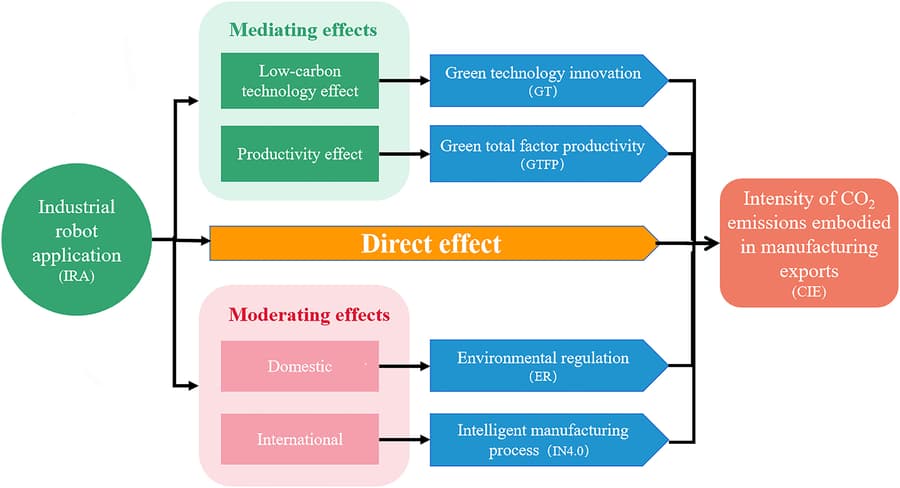
A recent study published in Data Science and Management has shed light on the potential of industrial robots to reduce carbon emissions associated with manufacturing exports. The research, conducted by scientists from Jiangsu University and Shaoxing University, analyzed data from 37 countries over two decades, revealing significant implications for global sustainability efforts in the manufacturing sector.
The study found that the application of industrial robots (IRA) led to a notable reduction in CO2 emissions embodied in manufacturing exports (CIE). This finding underscores the potential of robotic automation to lower the carbon intensity of exported goods, a crucial factor in addressing climate change concerns in global trade. However, the researchers also observed a U-shaped relationship, indicating that emission reductions may plateau over time, highlighting the need for ongoing innovation and careful management of automation technologies.
Interestingly, the impact of industrial robots on emissions varied across different sectors, with medium-tech industries experiencing the most substantial reductions. The effectiveness of IRA in cutting CO2 emissions was found to be influenced by advancements in low-carbon technologies, productivity improvements, and the presence of robust environmental regulations. This nuanced understanding suggests that while automation presents opportunities for greener trade, its success depends on how well it is integrated with broader sustainability initiatives and policy frameworks.
Dr. Xiaoli Wu, the study's corresponding author, emphasized the importance of aligning technological advances with sustainability goals. The research findings suggest that policymakers and industry leaders should focus on developing strategies that support the adoption of industrial robots while simultaneously promoting green technological innovation and strict environmental standards.
The implications of this study extend beyond the manufacturing sector, potentially influencing global trade policies and environmental strategies. By demonstrating the tangible benefits of industrial robots in reducing emissions, the research provides a compelling case for increased investment in automation technologies as part of a comprehensive approach to combating climate change. However, it also cautions against viewing automation as a standalone solution, stressing the need for a holistic approach that combines technological innovation with sound environmental practices and regulations.
As nations and industries grapple with the challenge of reducing their carbon footprints while maintaining economic growth, this study offers valuable insights into how advanced manufacturing technologies can contribute to a more sustainable future. The findings underscore the complex interplay between technology, policy, and environmental outcomes, highlighting the need for coordinated efforts across sectors to maximize the potential of industrial robots in driving down global carbon emissions.