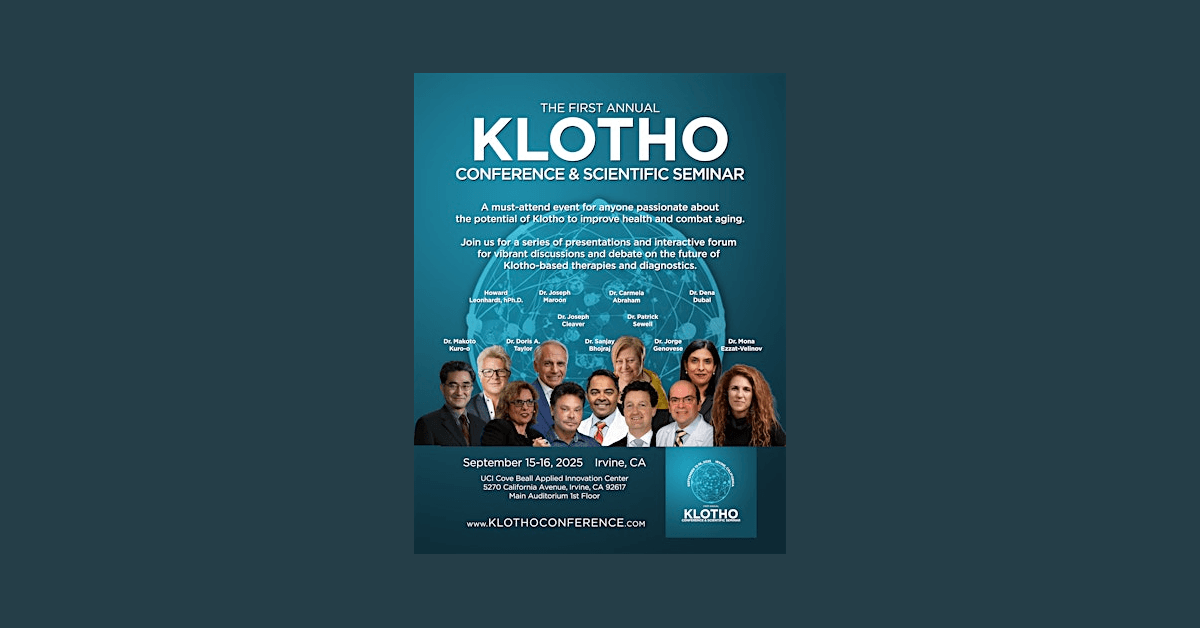
The inaugural Klotho Conference & Scientific Seminar, held September 15–16 at the UCI Beall Applied Innovation Center, united leading researchers, clinicians, and innovators to translate decades of Klotho research into actionable strategies for healthspan extension. This gathering represents a significant development in longevity medicine, as low Klotho levels have been linked to accelerated aging and increased risk for numerous diseases.
Conference highlights included a keynote from Dr. Makoto Kuroo, who discovered the Klotho gene, and presentations on various therapeutic approaches. Carmela Abraham presented results of a Klotho-mRNA-LNP approach to increasing Klotho levels, while Dr. Assumpció Bosch outlined preclinical progress on Klotho gene therapy for ALS. Human case studies presented by Petr Sramek provided insights into the translational journey from preclinical models to patient outcomes.
The conference dedicated significant attention to Klotho's role in specific health areas. A panel led by Dr. Dena Dubal and Dr. Miguel Chillon examined emerging evidence for Klotho's neuroprotective role, including its impact on neurodegenerative disease models. Dr. Ido Wolf and Dr. Tamar Rubinek summarized research on Klotho's potential in malignant tumor suppression. Additional sessions explored Klotho's intersection with inflammatory pathways, its role in muscle regeneration and functional mobility, and applications in medical aesthetics and organ regeneration.
Research presented at the conference indicates that low circulating Klotho levels correlate with numerous negative health outcomes. According to conference materials, low Klotho appears to increase cancer risk, lead to earlier cognitive decline and higher likelihood of brain disorders, increase risk of heart and kidney failure, precipitate higher levels of calcification and inflammation, and contribute to muscle atrophy and sarcopenia. Additional effects include potential contributions to depression, anxiety, addictions, inhibited sexual health, joint osteoarthritis, epileptic seizures in those under 65, age-related hair loss, skin damage and wrinkles, vision deterioration, hearing loss, osteoporosis, oxidative stress, mitochondrial dysfunction, susceptibility to infections, slower wound healing, accelerated telomere shortening, and reduced healthspan and longevity.
Conference organizers have made presentation materials available online, including a short highlight reel at https://youtu.be/ngH6qERXwRI and a full playlist of presentations at https://www.youtube.com/playlist?list=PLIzjBuzofFehaUfXU0GdvI2X8cr3gm6SY.
The conference catalyzed new partnerships among academic institutions, biotech companies, and longevity-focused investor networks, with several research groups indicating plans to accelerate clinical development of Klotho-based gene therapies. Dr. Ian White delivered a keynote outlining the translational path for Klotho therapies, including how naturally derived human Klotho sources can move into clinical trial phases.
With 4,390 papers published on Klotho since 1997, the conference reinforced the unified mission of raising Klotho biology into mainstream medical and therapeutic strategy to promote healthy aging. The success of this first conference sets the stage for annual gatherings that will expand to include translational clinical trials, diagnostics development, and policy frameworks to bring Klotho therapies to patients responsibly and equitably.