

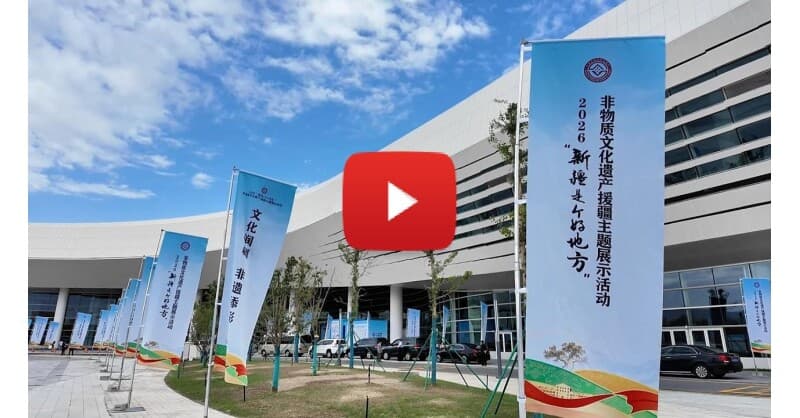
The 2026 "Xinjiang, A Land of Wonders" themed exhibition opened on July 30 in Shihezi City, Xinjiang, marking the largest edition of the event to date. Running through Aug. 3, the exhibition uses intangible cultural heritage as a bridge to promote interaction, exchange, and integration among all ethnic groups, according to the organizer.
This year's event, centered on "integration and co-creation," features an innovative exhibition hall that embodies the idea of beauty in diversity and harmony through mutual appreciation. The main venue, the Shihezi Convention and Exhibition Center, hosts six sections: "Intangible Heritage: Music and Dance," "Intangible Heritage: A Feast of Local Flavors," "Intangible Heritage: Technology and Innovation," "Intangible Heritage: Learning and Transmission," "Intangible Heritage: Cultural and Creative Market," and an interactive exhibition and performances themed "Intangible Heritage in Poetry." These sections offer a diverse range of experiences, including Chaoshan Yingge dance, Xinjiang Muqam, heritage food tastings, XR digital experiences, and interactive educational activities.
At the sub-venue, the Bayi Sugar Factory Cultural and Creative District, seven intangible cultural heritage items, including Nanjing Yunjin brocade and Hainan Li brocade, will be featured on a permanent basis. This move helps shift intangible cultural heritage presentation beyond short-term exhibitions toward sustained transmission, ensuring that these cultural treasures remain accessible to the public year-round.
The exhibition brings together more than 650 representative intangible cultural heritage items and is expected to receive 200,000 visits. By encouraging intangible cultural heritage practitioners to learn from one another and collaborate, the event injects new vitality into the safeguarding and transmission of intangible cultural heritage.
This year's exhibition underscores the growing importance of intangible cultural heritage in promoting cultural diversity and mutual understanding. The inclusion of permanent displays at the sub-venue highlights a strategic shift from temporary showcases to long-term preservation, which could serve as a model for other regions. The event's scale and expected attendance reflect a strong public interest in cultural heritage, indicating that such initiatives may play a key role in fostering social cohesion and cultural pride.
