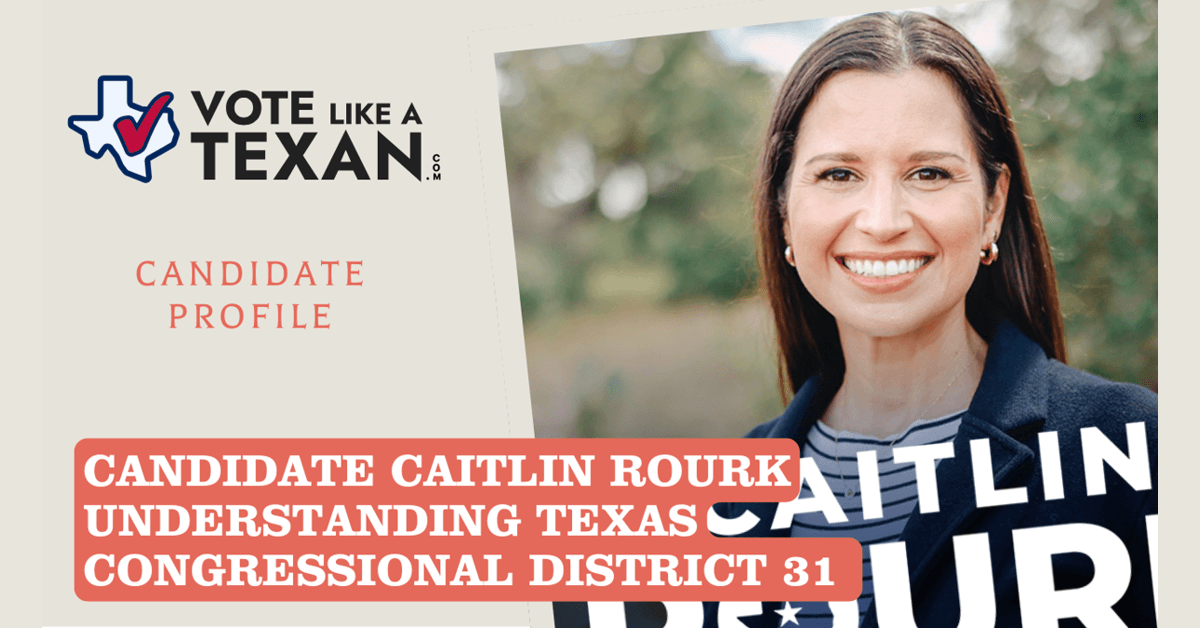
Caitlin Rourk, a military intelligence officer and first-time candidate for federal office, has officially launched her campaign to represent Texas Congressional District 10 following significant redistricting changes across the state. The new congressional boundaries placed Rourk's home directly within the district she now seeks to serve, creating what she describes as both a practical and deeply personal opportunity to represent her own community more authentically.
Rourk originally entered the race for Texas' 31st District in July, building a grassroots campaign centered on listening to residents and engaging independents and disengaged voters. When the Supreme Court ruling reshaped the district map, she shifted her focus to CD-10, which now includes her neighborhood. "Putting a yard sign in my own yard and asking my neighbors to vote alongside me—that mattered," Rourk said. "This is home."
Her campaign focuses on economic relief for Texas families, protecting and strengthening public schools, supporting military and veteran communities, and restoring trust in government. Voters across the region—spanning Bryan–College Station, Austin, and rural areas—have expressed concerns about housing affordability, insurance premiums, childcare access, and financial pressures shaping daily lives.
Rourk's service-minded approach reflects her upbringing in a family of educators and her years in uniform. She believes CD-10's unique intersection of defense innovation, higher education, and rural communities requires a representative with both lived experience and the stamina to meet constituents where they are. The district's composition makes this election particularly significant for balancing urban and rural interests within Texas' evolving political landscape.
Rourk also highlights voter turnout as a critical issue, noting that primaries and local elections shape Texas' future long before November general elections. "People are frustrated and often feel their vote doesn't matter," she said. "Texas needs more engaged, informed voices—and we're building a campaign to help make that possible."
The announcement comes amid broader educational efforts about Texas elections, including initiatives like Vote Like A Texan, which examines ideas, strategies, and real-world impacts voters should understand before heading to the polls. Rourk's campaign represents how redistricting can create unexpected opportunities for candidates to connect with their immediate communities, potentially changing how representatives approach constituent relationships in politically competitive districts.