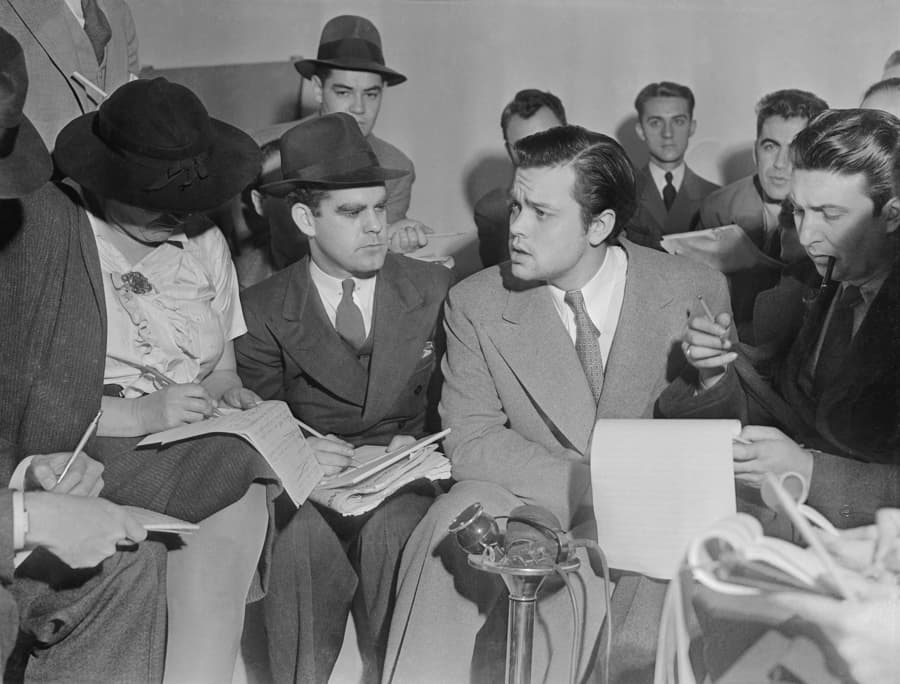
A new book released today challenges the recent revisionist history surrounding Orson Welles' infamous 'War of the Worlds' radio broadcast. 'Dead Air: The Night Orson Welles Terrified America' by national bestselling author William Elliott Hazelgrove argues that the broadcast's impact was far more significant than recent accounts suggest.
Hazelgrove's research, based on thousands of newspaper articles from the time, paints a picture of widespread terror across America on the night of October 30, 1938. The author contends that between six to twelve million people heard the broadcast, contradicting claims that less than a million listeners tuned in. The book describes incidents of heart attacks, suicides, and widespread panic, with people fleeing their homes and refusing to return even after being informed it was a fictional broadcast.
The author attributes the mass panic to several factors, including the jittery pre-war atmosphere and the public's trust in radio as a news medium, bolstered by Franklin D. Roosevelt's Fireside Chats. Hazelgrove argues that even those who didn't hear the broadcast directly were affected by the rapidly spreading panic.
This new interpretation of events challenges the narrative that has emerged in recent years, which suggested that newspapers exaggerated the panic to discredit the rising medium of radio. Hazelgrove's work has received positive reviews from The Wall Street Journal, Publishers Weekly, and Booklist, lending credibility to his claims.
The book's release is significant for media historians and cultural scholars, as it reopens the debate about the power of mass media to influence public behavior. It also serves as a reminder of the importance of critical media literacy in an age of instant information and potential misinformation. By revisiting this historical event, Hazelgrove's work prompts readers to consider how modern media might still have the power to provoke mass reactions, intentionally or unintentionally.
'Dead Air: The Night Orson Welles Terrified America' is published by Rowman and Littlefield and is available in hardcover starting today, November 19th, 2024.