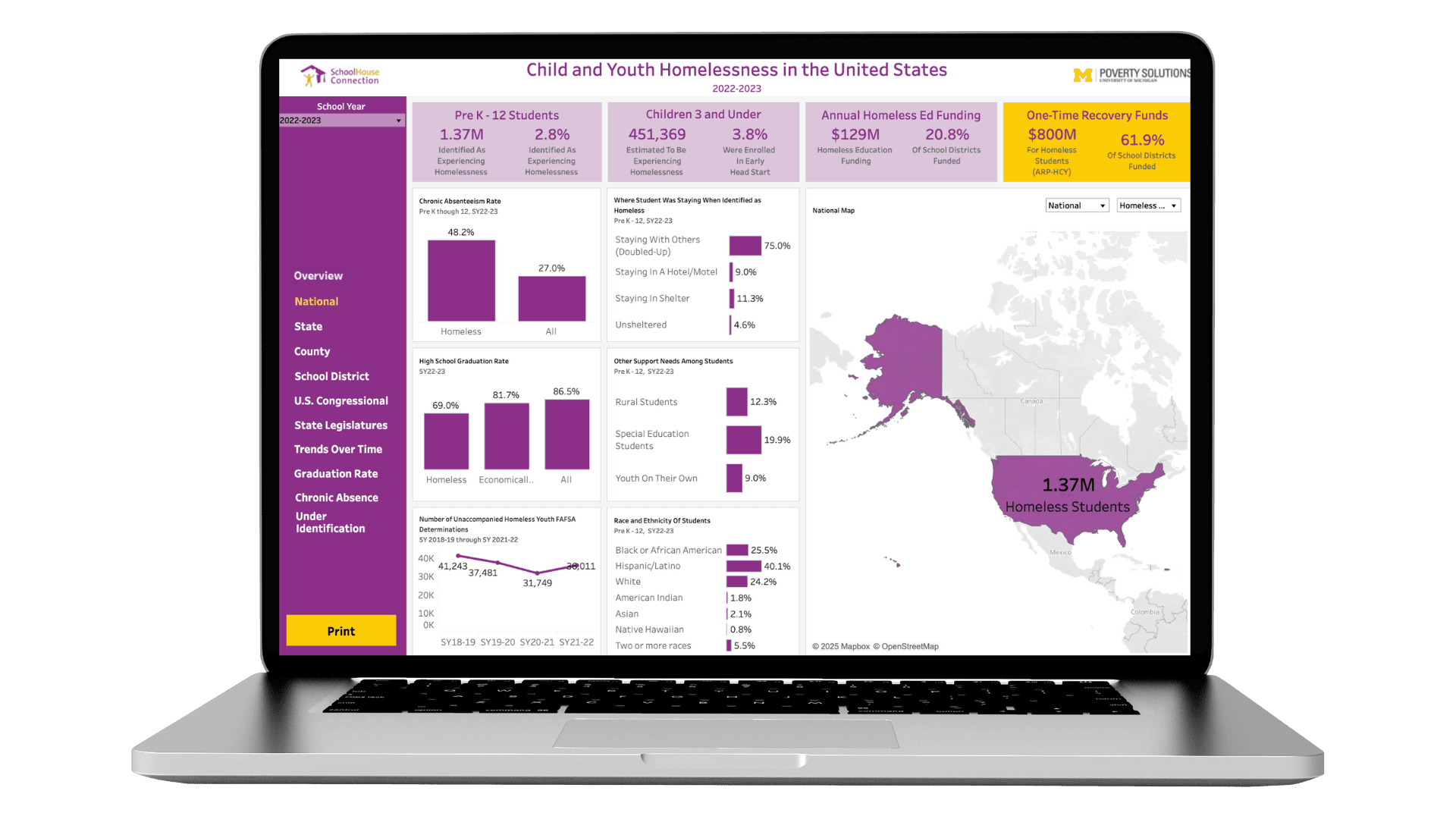
A collaborative effort between SchoolHouse Connection and the University of Michigan's Poverty Solutions has produced detailed, interactive data profiles that shed light on the complex landscape of child and youth homelessness across the United States.
The new data profiles, which analyze federal data over a four-year period, offer an unprecedented look into the educational challenges faced by students experiencing homelessness. The interactive dashboard allows users to explore homelessness trends from national and state levels down to local communities, U.S. Congressional districts, and state legislative districts.
Key features of the data profiles include the ability to assess potential under-identification of homeless students in school districts and highlight districts categorized as 'severely underfunded' - those that have identified homeless students but lack McKinney-Vento subgrants to provide necessary support.
Barbara Duffield, Executive Director of SchoolHouse Connection, emphasized the significance of the project, noting that child and youth homelessness remains largely invisible in communities and schools. The data profiles aim to illuminate the harmful impact of homelessness on students' school attendance and academic achievement.
Jennifer Erb-Downward from Poverty Solutions stressed the importance of making this information accessible to decision-makers at local, state, and national levels, believing that such transparency is crucial to preventing and solving homelessness.
The profiles provide critical comparative insights, allowing users to examine educational outcomes between homeless students and their housed peers through indicators such as chronic absenteeism and graduation rates.
By making these data profiles publicly available, the organizations hope to drive policy discussions, raise awareness, and ultimately create more targeted interventions to support students experiencing homelessness.