

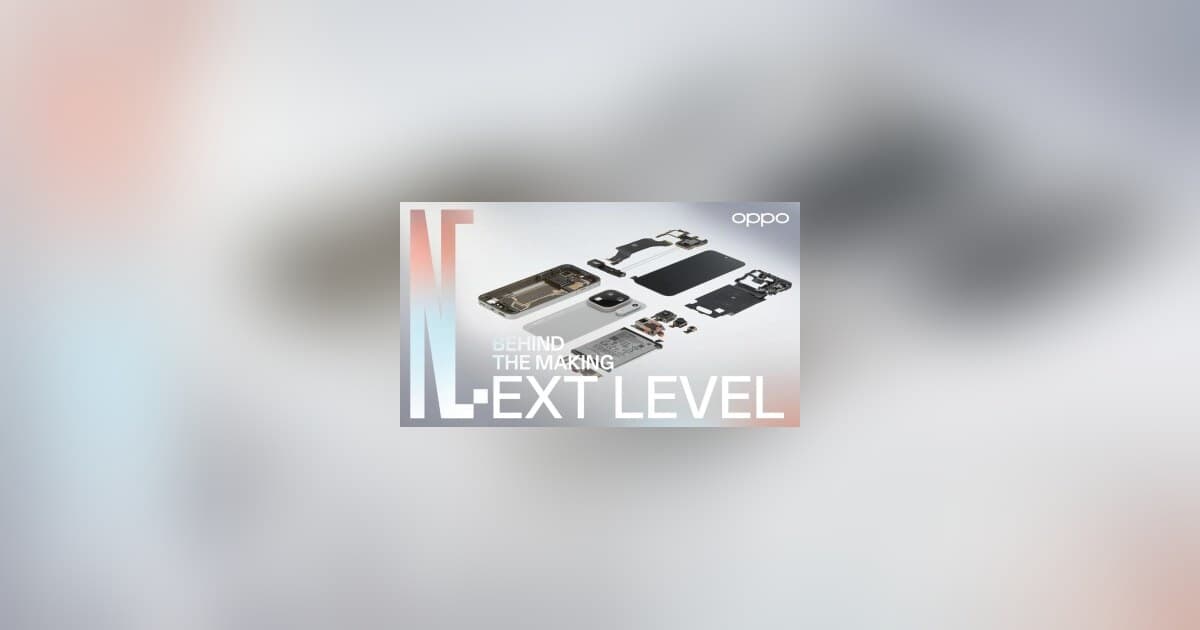
OPPO has offered members of the media a closer look at the development, testing and manufacturing processes behind its newly debuted Find X10 Series, the flagship lineup it markets as a True Camera Phone. The company detailed the effort through Media OutReach Newswire, framing the disclosure as an effort to show how rigorous processes translate into consistent quality on a global scale.
The announcement matters because it shifts the competitive conversation from specifications to the industrial system that produces them. The Find X10 Series debuted with industry-leading camera hardware, including what OPPO describes as the industry-first Triple 200MP Camera System on the Find X10 Pro Max, a next-generation LUMO True Image Engine, an all-new flagship design and AI-powered ColorOS 17. OPPO's argument is that those features are only as good as the design discipline, validation and factory automation behind them.
Ling Liu, Overseas CMO of OPPO, said quality is the foundation of the company's entire product portfolio and that control over the product creation process allows OPPO to realize that commitment at scale. The company said the tour revealed an integrated approach in which each technology and feature is developed, tested and verified through rigorous processes.
On design, OPPO pointed to its Clean and Sophisticated language and a One-Piece Sculpted Glass back cover that rises toward the camera area in a three-level transition. The Luna White edition of the Find X10 Pro Max adds a fluted texture made through high-precision CNC engraving and a two-tone woven pattern visible only as light shifts across the matte glass. The company said the Luna White colorway alone went through more than 40 rounds of fine-tuning, while a single rear-panel pattern required more than 10 rounds of refinement.
Camera validation is equally intensive. Building on its Hasselblad co-development begun in 2022, OPPO said it assesses HDR performance, facial brightness and skin-tone gradation across 40 lighting conditions and tests color against 140 different colors rather than the industry-standard 24-color chart. It also uses lifelike human head models, a dedicated concert-stage setup and multi-axis robotic arms to simulate hand movement and vibration.
For AI, ColorOS 17 introduces a new Agent Mode in AI Mind Pilot powered by third-party agent Manus, plus an AI Photo Agent backed by OPPO's proprietary Visual-Language Model and six expert image models. OPPO said it operates nine Internet Data Centers across six regions with 99.99% availability, and its AI Security Framework and Private Computing Cloud, developed with Google, isolate and protect user data.
Manufacturing underpins the scale. Since introducing automated manufacturing in 2017, OPPO has expanded to nine smart manufacturing centers across China, India, Indonesia, Egypt, Turkey, Brazil, Pakistan and Bangladesh, with over 95% of Surface Mount Technology lines and an average of 85% of final assembly lines fully automated. At the Chang'an Intelligent Manufacturing Center in China, more than 300 automated testing stations support final assembly lines shipping up to 7,200 finished Find X10 Pro Max devices daily.
For consumers and rivals alike, the disclosure signals that premium smartphone competition is increasingly a contest of verification and production consistency, not just headline features.
