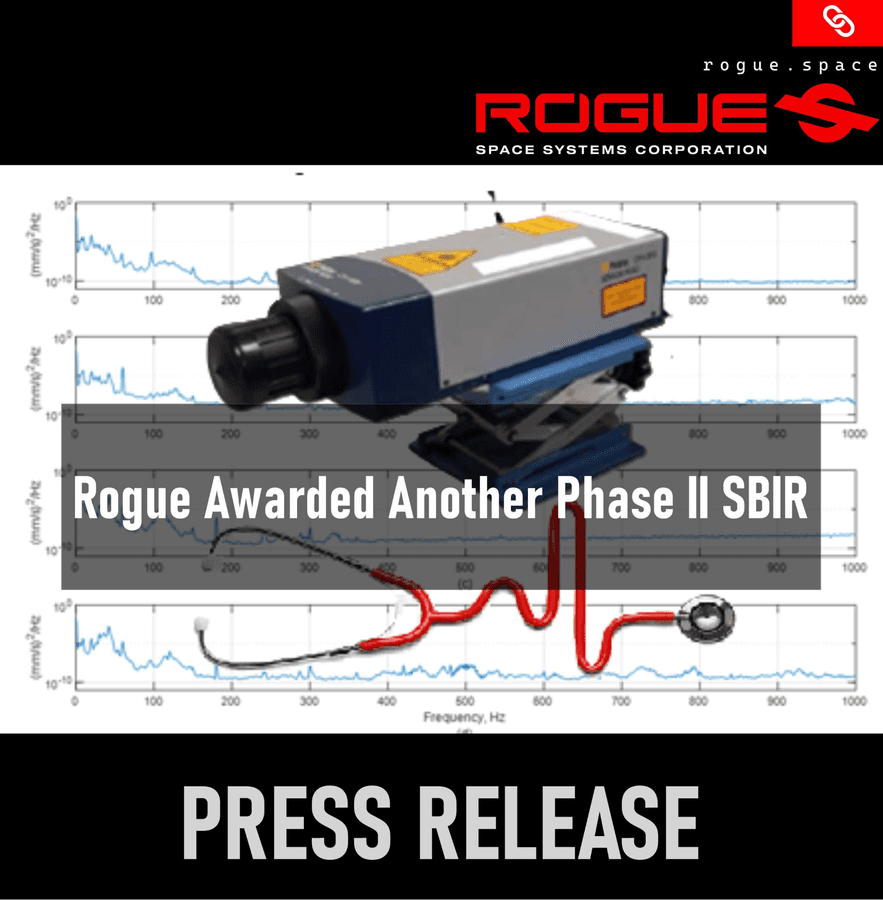
Rogue Space Systems Corporation has been awarded a Small Business Innovation Research (SBIR) Phase II award by SpaceWERX, the innovation arm of the U.S. Space Force. Valued at over $1 million, this award will support the development of Rogue's Contactless LAser Satellite Stethoscope (CLASS) technology aimed at improving the characterization of Resident-Space-Objects (RSOs).
Rogue's CLASS technology utilizes a laser vibrometer to conduct contactless in-situ audio and harmonics diagnostics on spacecraft. By measuring electronic vibrations with a laser beam, CLASS can identify spacecraft and detect anomalies based on their acoustical signatures. This technology is poised to significantly enhance current remote sensors used in satellite characterization, providing elevated situational awareness crucial for space traffic management and satellite servicing.
According to Rogue CEO Jon Beam, the ability to remotely detect and characterize space objects through their unique 'heartbeats' offers new opportunities for diagnosis and repairs. Chief Operating Officer Brook Leonard emphasized that laser vibrometry increases domain situational awareness, contributing to a better understanding of who is operating in space and how they are operating.
This advancement is a vital step in Rogue's technology roadmap, bringing the company closer to building its fleet of Orbots™. These autonomous robots will benefit from enhanced client characterization, making in-space logistics services safer and more effective.
The award highlights the success of the SBIR and Small Business Technology Transfer (STTR) initiatives. The Air Force Research Laboratory and AFWERX have streamlined the SBIR/STTR process, accelerating the proposal-to-award timeline and expanding the range of innovations funded by the Department of the Air Force (DAF). Rogue's progress exemplifies the effectiveness of this approach.
Overall, Rogue's CLASS technology represents a significant leap forward in space situational awareness and satellite servicing, with far-reaching implications for global space initiatives and in-space logistics.