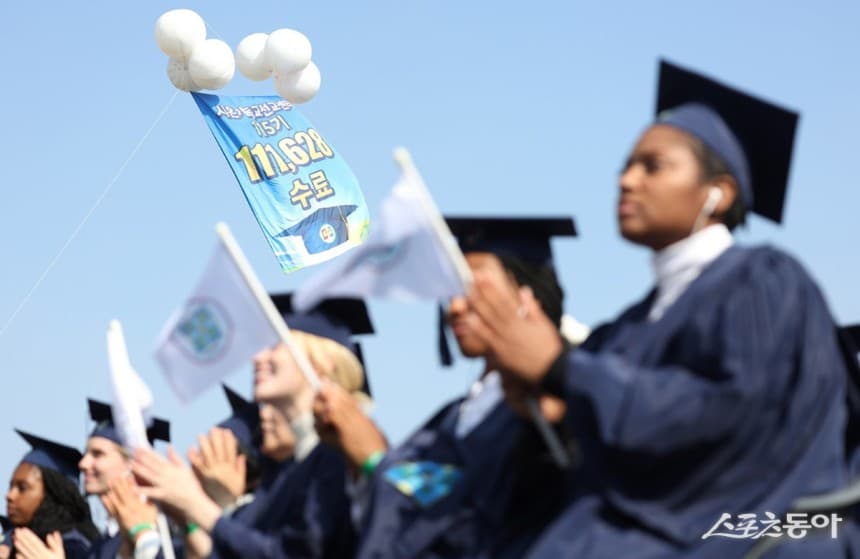
The Shincheonji Church of Jesus has achieved a remarkable feat in religious education, graduating a record-breaking 111,628 students from its Zion Christian Mission Center. This event, held at the Shincheonji Cheongju Church Branch, marks the fourth consecutive year the organization has surpassed 100,000 graduates, demonstrating the church's growing influence and the increasing popularity of its Bible study program.
Chairman Man-Hee Lee presided over the 'Class 115, 110,000 Joint Graduation Ceremony,' which attracted participants from around the world. The ceremony was initially planned for the Imjingak Peace Park but was relocated at the last minute due to a cancellation by the Gyeonggi Tourism Organisation. Despite this setback, the event proceeded successfully, with many attendees adapting to the change in venue.
The graduation ceremony's significance extends beyond mere numbers. It reflects a growing global interest in biblical studies and the Shincheonji Church's teachings. The event drew not only graduates but also foreign religious leaders who traveled to Korea specifically for this occasion, underlining its international importance.
Founded in 1984 in Seoul, South Korea, the Shincheonji Church of Jesus has experienced rapid growth, now boasting branches in over 120 countries and a worldwide congregation exceeding 400,000 members. The Zion Christian Mission Centre, the church's theological school, offers a free Bible course divided into three modules, typically completed in 6-8 months.
This massive graduation event signals the Shincheonji Church's expanding influence in the realm of religious education and its ability to attract and retain students on a global scale. It also highlights the growing interest in structured biblical studies among diverse populations worldwide. As religious organizations seek to maintain relevance in an increasingly secular world, the success of Shincheonji's educational program could serve as a model for other faith-based institutions looking to engage and educate their followers.
The consistent growth in graduation numbers over the past four years suggests a trend that could have significant implications for religious demographics and the landscape of faith-based education. As the Shincheonji Church continues to expand its reach, it may influence religious discourse and practices on an international level, potentially reshaping aspects of contemporary Christianity.