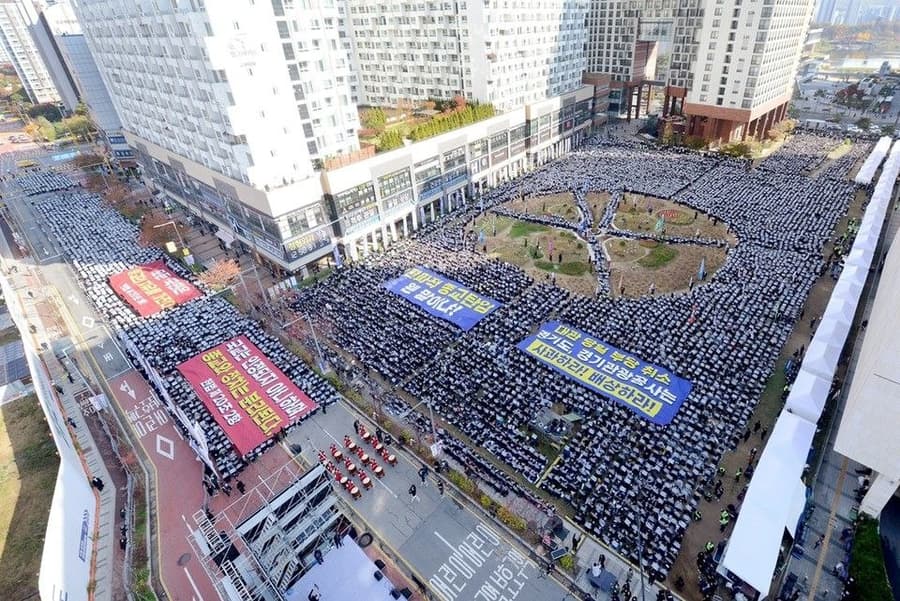
Thousands of Shincheonji Church members gathered in front of the Gyeonggi Provincial Office in South Korea on November 15, 2024, to protest the sudden cancellation of their venue for a major international event. The Gyeonggi Tourism Organization revoked the church's rental agreement on the day of the planned 110,000-person graduation ceremony, sparking outrage and accusations of religious discrimination.
The church claims to have followed all legal procedures and received prior approval for the October 30th event in Imjingak, Paju. The abrupt cancellation has been denounced as a violation of South Korea's constitutional guarantees of religious freedom. Critics argue that the decision was made under pressure from other religious groups, raising questions about the separation of church and state in the country.
This incident highlights ongoing tensions between Shincheonji Church and mainstream religious organizations in South Korea. The church alleges a pattern of persecution, including forced investigations, tax probes, and arrests of its members. They argue that politicians have used the church as a scapegoat to gain votes, leading to severe social criticism and pressure.
The protest serves as a significant moment in the broader context of religious freedom in South Korea. It underscores the challenges faced by minority religious groups and the potential for political interference in religious affairs. The controversy also raises important questions about the role of government agencies in mediating disputes between religious organizations and ensuring equal treatment under the law.
As South Korea grapples with these issues, the incident may prompt a wider discussion on religious tolerance, the limits of state intervention in religious matters, and the need for clearer guidelines to protect the rights of all religious groups. The outcome of this dispute could have far-reaching implications for religious freedom and civil liberties in the country, potentially influencing policy decisions and public attitudes toward minority religious organizations.