

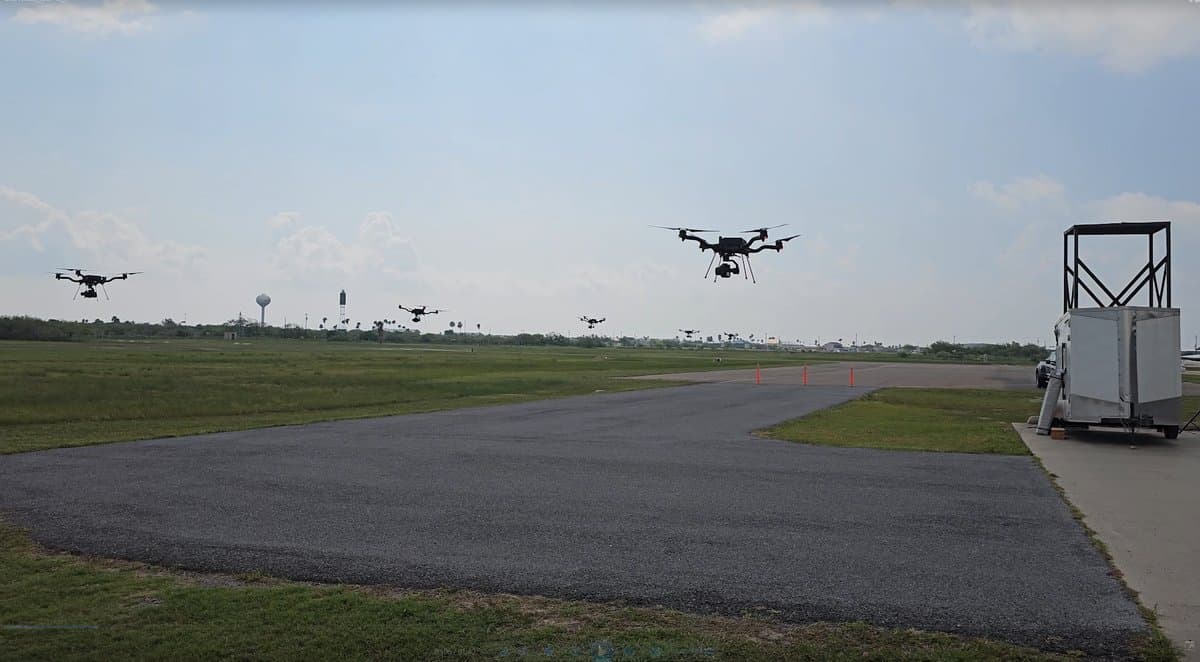
Autonomous systems developers often face significant hurdles when transitioning from simulation to real-world testing. The need for aircraft, crews, ranges, travel, weather, and hardware can delay progress and inflate costs. Tempest Droneworx™ aims to eliminate these barriers with its new Corvus MRDR™ (Modular Robotics Development & Reporting) platform. Announced on August 18, 2026, this tool allows engineers to test their algorithms and control methods at scale, then progressively replace simulated vehicles with real ones without altering their existing workflow or surrendering ownership of their intellectual property.
The importance of this development lies in its potential to accelerate the deployment of autonomous systems across various sectors. By enabling developers to validate their code in a controlled, simulated environment before moving to physical drones, Corvus MRDR reduces the time and expense associated with traditional field testing. This efficiency could speed up innovations in public safety, defense, commercial logistics, and academic research, ultimately leading to technologies that improve quality of life.
Corvus MRDR integrates simulated and physical drones through two key components: CROS and RAVN. These systems allow for incremental replacement of virtual aircraft with real ones in real-world coordinates, ensuring a seamless transition. This hybrid approach means developers can start with purely simulated testbeds and gradually introduce physical hardware, all while maintaining a consistent workflow. The platform is platform-agnostic, meaning it works with various drone systems, making it versatile for diverse applications.
For developers, the benefits are twofold. First, they can iterate faster, testing multiple scenarios and edge cases that would be impractical or dangerous to replicate with physical drones. Second, they retain full ownership of their intellectual property, a critical concern for companies and researchers alike. This preservation of IP rights encourages innovation and protects competitive advantages.
Tempest Droneworx, based in Houston, is a Service-Disabled Veteran-Owned Small Business (SDVOSB) that serves commercial, academic, public safety, government, and defense customers. The company's mission is to turn autonomous systems and sensor data into real-time operational insight. The introduction of Corvus MRDR aligns with this mission by providing a tool that enhances development capabilities.
The potential impact of Corvus MRDR extends beyond individual developers. By lowering the barriers to autonomous systems development, it could foster a more robust ecosystem of innovators. This could lead to faster adoption of drones in critical applications such as emergency response, environmental monitoring, and infrastructure inspection. For the industry, the platform represents a shift toward more efficient and cost-effective development cycles, which could drive down the cost of autonomous technologies and make them more accessible.
In a world where autonomous systems are becoming increasingly integral to daily life, tools like Corvus MRDR are essential. They enable the safe and efficient development of technologies that can enhance safety, productivity, and connectivity. As the demand for autonomous solutions grows, the ability to test and refine algorithms rapidly will be a key differentiator for developers and organizations.
For more information about Tempest Droneworx and its products, visit their website at Tempest Droneworx. The full announcement, including images and bios, is available here.
