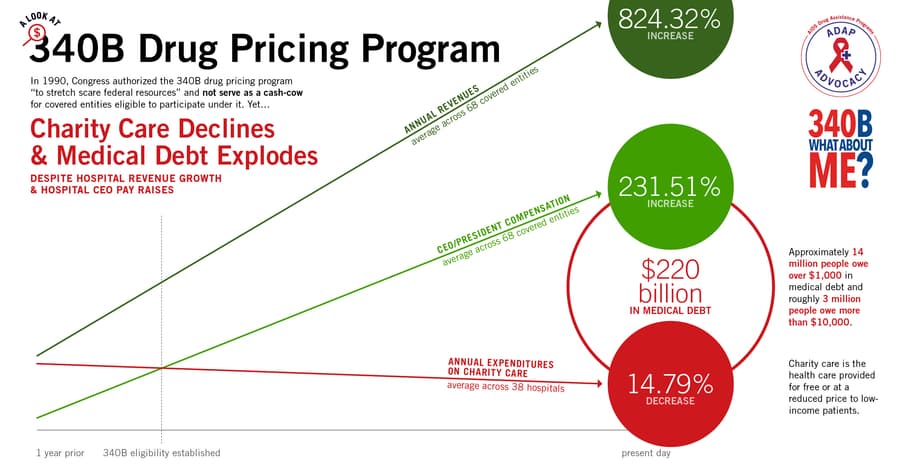
ADAP Advocacy, an organization dedicated to improving access to care for individuals living with HIV/AIDS, has released a series of infographics that shed light on concerning trends within the 340B Drug Pricing Program. The infographics, published as part of ADAP Advocacy's 340B Project, reveal a troubling disconnect between hospital financial performance and patient outcomes.
The newly released data visualizations highlight a decline in hospital charity care coinciding with a surge in medical debt, despite hospitals experiencing revenue growth and CEOs receiving pay raises. This information comes at a time when the Ryan White Grantee 340B Patient Advisory Committee, sponsored by ADAP Advocacy, has been increasingly focused on the impact of medical debt on patients living with chronic illnesses and rare diseases.
The 340B Drug Pricing Program, designed to provide certain healthcare providers with discounted medications to help vulnerable or uninsured patients, has been a subject of debate in recent years. These infographics add to the conversation by presenting data that suggests the program may not be achieving its intended goals for all stakeholders.
The release of these infographics is significant for several reasons. First, it provides concrete data that policymakers and healthcare administrators can use to evaluate the effectiveness of the 340B program. Second, it raises important questions about the allocation of resources within participating hospitals and whether the benefits of the program are reaching the intended recipients – namely, vulnerable patients.
For patients, especially those living with HIV/AIDS and other chronic conditions, this information could be crucial in understanding their healthcare options and the potential financial risks they face. The highlighted increase in medical debt is particularly concerning, as it suggests that even with programs like 340B in place, many patients are still struggling with the cost of care.
Healthcare providers and hospital administrators may need to reassess their charity care policies and how they utilize the savings from the 340B program. The infographics could spark internal reviews and potentially lead to changes in how hospitals approach care for vulnerable populations.
As the healthcare landscape continues to evolve, transparency in programs like 340B becomes increasingly important. ADAP Advocacy's infographic series contributes to this transparency, potentially influencing future policy decisions and encouraging a broader discussion on how to best serve patients while maintaining the financial stability of healthcare institutions.