

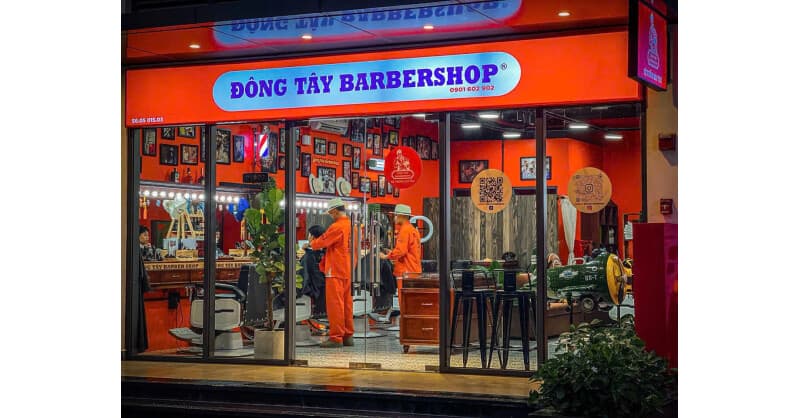
East West Barbershop, a Vietnamese men's grooming chain, is preparing to enter the U.S. market, a move that will test whether its business model—scaled across Asia—can succeed in the world's most competitive barbershop industry. The company, founded in Vietnam in 2018, has grown to more than 130 locations across Vietnam, Thailand, China, Uzbekistan, and Hungary, with over 1,000 barbers.
The U.S. market is a deliberate choice, according to Mr. Nguyen Hoai Thanh, Chairman of Dong Tay Barbershop Vietnam Joint Stock Company. "We chose the United States not because it is the easiest market to enter, but because it is one of the most demanding and competitive barbershop markets in the world," he said in a statement. "If a model built in Vietnam can succeed in the U.S., it would be the clearest testament to East West Barbershop's ability to take its brand and business model to the international stage."
The U.S. is home to established chains like Great Clips, Supercuts, and Sport Clips, which have demonstrated the potential for standardized, scalable grooming services. Great Clips, for instance, operates thousands of salons across the U.S. and Canada, proving that a haircut business can achieve massive scale through consistent replication. East West Barbershop aims to differentiate itself by offering an "Experiential Barbershop" concept, combining grooming with relaxation and entertainment.
Customers are greeted by green spaces, pool tables, chess, a piano, a bar, and bookshelves. The chain, catering exclusively to men and boys, also features car-themed barber chairs and play areas for children. Services extend beyond haircuts to include hair washing, ear cleaning, massage, hair restoration treatments, perming, coloring, nail care, shoe cleaning, and phone sanitization. This approach reflects changing consumer preferences, where the overall experience is as important as the service itself.
The company's international expansion includes a focus on barber training and skills standardization. It also emphasizes social initiatives, such as free vocational training for young people, mobile haircut programs, and charitable contributions. These efforts contribute to a brand story that combines business growth with community development.
The U.S. market presents significant challenges, including intense competition and cultural differences. East West Barbershop will need to convince American consumers to choose a Vietnamese brand over familiar domestic options. Its strategy is not to compete on price alone but to "export" a business model that integrates customer experience, workforce training, operating standards, and franchising.
If successful, the company's story would demonstrate that a service business built in Vietnam can be standardized, franchised, and compete on a global stage. The move is a critical test for the chain, which has been ranked among the Top 10 large-scale grooming brands in the world. As it enters the U.S., the question remains whether its model can be effectively transferred and operated in a completely different market.
The company's headquarters are in Ho Chi Minh City, and its website is dongtaybarbershop.com.
