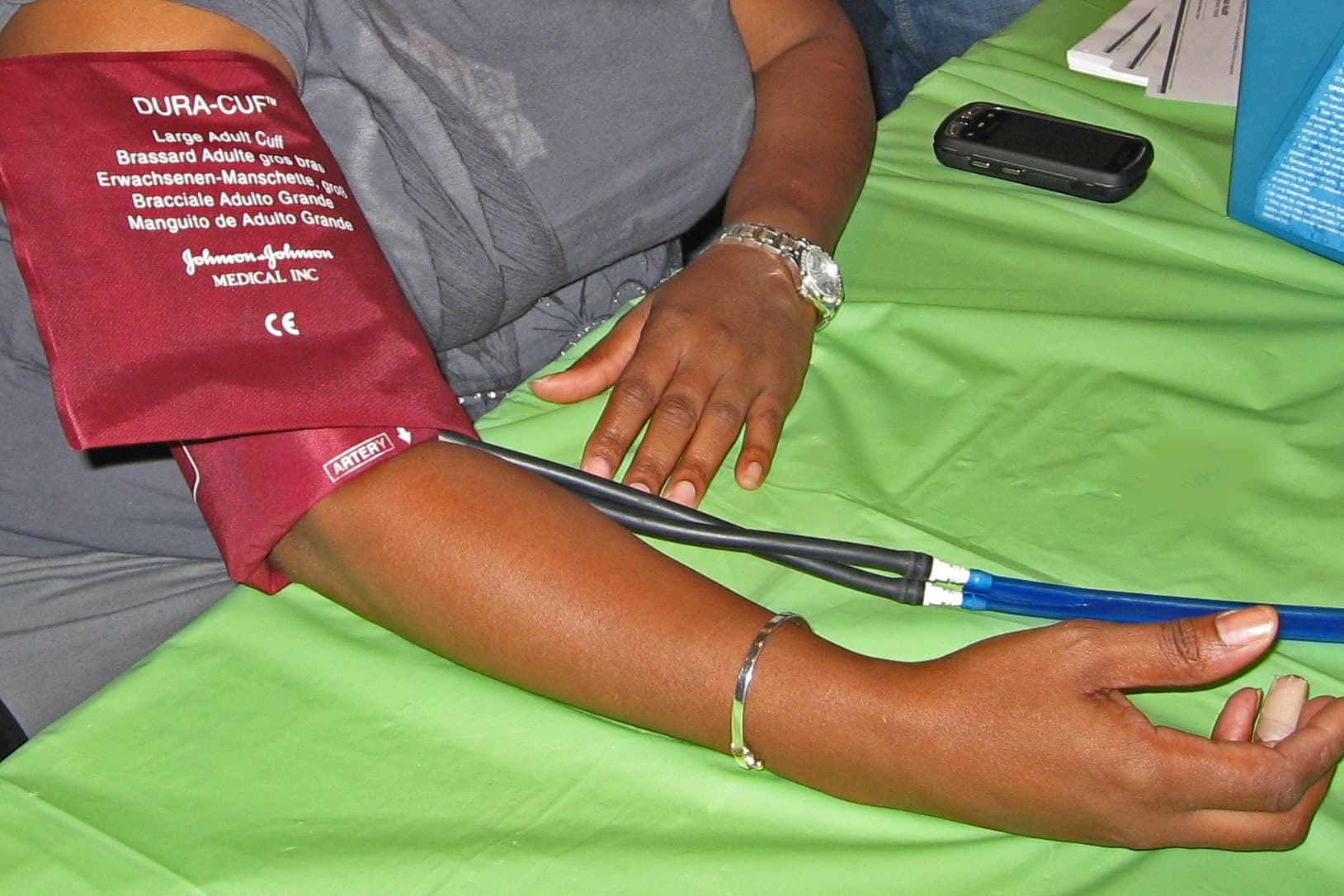
At-home blood pressure monitor cuffs may not properly fit a significant portion of U.S. adults, according to preliminary research presented at the American Heart Association’s Hypertension Scientific Sessions 2024. The study estimates that the arm cuffs for 10 of the most popular home blood pressure monitors do not fit up to 18 million adults in the U.S., including nearly 12% of Black adults. This issue could lead to inaccurate blood pressure measurements, which are critical for managing conditions such as hypertension.
Researchers investigated the cuff sizes available with these monitors and found that most devices had a uniform size range designed to fit arm circumferences from 8.7 to 16.5 inches. However, this standardization means that nearly 7% of U.S. adults—approximately 18 million people—may receive inaccurate readings due to ill-fitting cuffs. A recent clinical trial found that cuffs even slightly too small or too large could significantly misestimate blood pressure levels.
“Most popular blood pressure devices we tested had the same cuff size coverage,” said senior study author Kunihiro Matsushita, M.D., Ph.D., FAHA, of Johns Hopkins University. “We estimate that these one-size cuffs would not properly fit approximately 18 million U.S. adults, potentially providing inaccurate blood pressure measures.”
According to the American Heart Association’s 2024 Statistical Update, nearly half of U.S. adults have been diagnosed with high blood pressure. Uncontrolled high blood pressure can lead to severe health risks, including heart attack, stroke, and heart failure. The Association recommends all individuals with high blood pressure to monitor their condition using home devices between medical visits to ensure effective treatment management. Upper arm cuff devices are preferred over wrist devices for accuracy.
The study reviewed 10 widely-used blood-pressure monitoring devices sold through a large online retailer. Nine out of the ten devices offered a cuff-size range of 22 to 42 centimeters. Despite several manufacturers offering additional cuff sizes at an extra cost, the standard issue cuffs were the primary focus, as most consumers are likely to use these default sizes.
Data from the U.S. National Health and Nutrition Examination Survey (NHANES) from 2015-2020 and U.S. Census data were used to estimate the population affected by these sizing issues. The study concluded that 6.7% of U.S. adults could not use these devices due to incompatible arm circumferences. Black adults were disproportionately affected, with 11.8% unable to use the standard cuffs compared to 6.6% of white adults, 5.2% of Hispanic adults, and 1.8% of Asian adults.
“This disparity in sizing is particularly concerning given the already high and increasing prevalence of high blood pressure among Black adults,” Matsushita emphasized. He called for manufacturers to develop and offer affordable blood pressure measuring devices that accommodate a broader range of arm sizes and for healthcare professionals to measure patients’ arm circumferences to recommend appropriate cuff sizes.
The study's limitations included its focus on a single large online retailer and only 10 devices. However, the importance of using correctly sized cuffs to avoid systematic errors in blood pressure measurement cannot be overstated. “The best solution is to have cuffs of different sizes available, so a cuff that is of correct size for the patient can be chosen,” said Paul K. Whelton, M.B., M.D., M.Sc., FAHA, of Tulane University.